
Faculty

Olivia Bailey Assistant Professor of Philosophy (Ph.D., Harvard University). She works on questions in moral psychology and the history of moral philosophy (particularly the British moralists). Her current research is concerned with the ethical and epistemic significance of empathy.

Janet Broughton Professor Emerita (Ph.D., Princeton University). She is a scholar of 17th- and 18th-century philosophy, with a special interest in skepticism. She is author of Descartes’s Method of Doubt, and she recently completed Hume’s Radical Scepticism, which will be published by Oxford University Press. Over the years, she has served as the dean of arts and humanities, the vice provost for the faculty, and the executive dean of the College of Letters & Science.

John Campbell Willis S. and Marion Slusser Professor of Philosophy (D.Phil, University of Oxford). His main interests are in theory of meaning, metaphysics, and philosophy of psychology. He is currently working on the question whether consciousness, and in particular sensory awareness, plays any key role in our knowledge of our surroundings. He is also working more generally on causation in psychology. He is the author of Past, Space and Self (1994) and Reference and Consciousness (2002).

John Carriero Visiting Professor Emeritus (Ph.D. Harvard University). He works on early modern philosophy and is author of Between Two Worlds: A Reading of Descartes’s “Meditations”. He has published articles on Descartes, Spinoza, and Leibniz, and is currently working on a book on Spinoza’s Ethics. You can find out more about his work here.
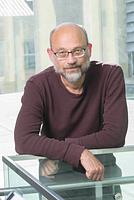
Joshua Cohen Distinguished Senior Fellow (Ph.D., Harvard University). A specialist in political philosophy, he has written extensively on issues of democratic theory, freedom of expression, religious freedom, political equality, and global justice. His recent books include Philosophy, Politics, Democracy (Harvard University Press, 2009); Rousseau: A Free Community of Equals (Oxford University Press, 2010); and The Arc of the Moral Universe and Other Essays (Harvard University Press, 2011). He is co-editor of the Norton Introduction to Philosophy. Cohen is on the faculty at Apple University and spends one day each week at Berkeley as Distinguished Senior Fellow at the School of Law, the Department of Philosophy, and the Department of Political Science.

Tim Crockett Continuing Lecturer (Ph.D., UC Berkeley). His area of specialization is early modern (17th and 18th century) philosophy. His primary areas of interest are 17th century metaphysics and epistemology, and the ways in which changes in science informed the philosophical views of early modern thinkers. He is also interested applied ethics and political philosophy. His published works focus on Descartes’s and Leibniz’s metaphysics.
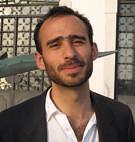
Shamik Dasgupta (Equity Advisor, Undergraduate Advisor) Associate Professor of Philosophy (Ph.D., New York University). He works primarily in metaphysics and the philosophy of science, with additional research interests in epistemology and ethics. Please visit his website for further details.
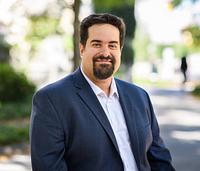
Johann Frick Associate Professor of Philosophy (B.Phil., Oxford; Ph.D., Harvard). His main interests span moral and political philosophy, practical reason, and applied ethics. His current work focuses on population ethics, the ethics of risk, moral dilemmas and moral luck, the notion of interpersonal justification, and the ethics of immigration and national partiality. Publications include “Contractualism and Social Risk” (Phil. & Public Affairs, 2015), “What We Owe to Hypocrites” (Phil. & Public Affairs, 2016), “National Partiality, Immigration, and the Problem of Double-Jeopardy” (Oxford Studies in Political Phil. 2020) and “Conditional Reasons and the Procreation Asymmetry” (Philosophical Perspectives, 2020).
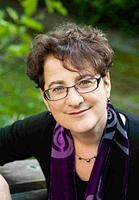
Hannah Ginsborg (Equity Advisor) Willis S. and Marion Slusser Professor of Philosophy (Ph.D., Harvard University). Her interests include Kant, Wittgenstein, aesthetics, and topics in contemporary philosophy of mind and language. She is the author of The Normativity of Nature: Essays on Kant’s Critique of Judgement (Oxford: Oxford University Press, 2015). Her recent publications include articles on Wittgenstein, rule-following skepticism, concepts, self-consciousness, the normativity of meaning, and normative realism.

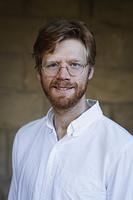
Verónica Gómez Sánchez Assistant Professor (Ph.D., Rutgers University). Her main research interests lie in the intersection of philosophy of science, metaphysics and cognitive science. Some of her recent work deals with the laws and vocabularies of the special sciences, and their relation to physics. She is also interested in the nature of intentionality and its role in computational explanations in cognitive science.
.jpeg)
Landon Hobbs Lecturer (Ph.D., Stanford University). His area of specialization is in ancient Greek and Roman philosophy. His research focuses on ancient understandings of causation (especially causal principles that impose a requirement of likeness between cause and effect) and on Aristotle’s Metaphysics.
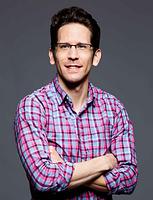
Wesley H. Holliday Professor of Philosophy (Ph.D., Stanford University). He has worked mainly in logic and social choice theory. In logic, his research has ranged over modal and nonclassical logic, logic and natural language, and logic and probability. In social choice theory, he has focused on voting theory, computational social choice, and applications of social choice to AI ethics and safety.
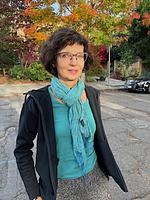
Katharina Kaiser Continuing Lecturer (Universität Hamburg). Her current research and teaching interests extend to a range of topics in 19th century post-Kantian philosophy (Early German Idealism, Nietzsche, Schopenhauer), 20th century philosophy (Hannah Arendt, Adorno, Heidegger), aesthetics (the sublime), and the theory of art (history and philosophy of the avant-garde).

Niko Kolodny Professor of Philosophy (Ph.D., University of California–Berkeley). His main interests are in moral and political philosophy. His publications include “Rule Over None” (Philosophy and Public Affairs, 2014), “Why Be Rational?” (Mind, 2005), and “Love as Valuing a Relationship” (The Philosophical Review, 2003).

Geoffrey Lee Associate Professor of Philosophy (Ph.D., New York University). His main areas of research interest are philosophy of mind, metaphysics, and the foundations of cognitive science and neuroscience.
Anthony A. Long Irving Stone Professor of Literature Emeritus (Department of Ancient Greek and Roman Studies) (Ph.D., University of London). His main field of teaching and research is ancient philosophy. He is editor of The Cambridge Companion to Early Greek Philosophy and his other books include Hellenistic Philosophy (University of California Press) and Epictetus: A Stoic and Socratic Guide to Life (Oxford University Press).
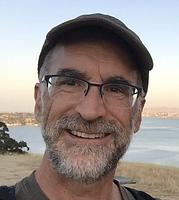
John MacFarlane Professor of Philosophy (Ph.D., University of Pittsburgh). His primary research interests lie in the philosophy of language, philosophical logic, and related issues in metaphysics and epistemology; he also maintains a secondary interest in ancient philosophy. He is the author of Assessment Sensitivity: Relative Truth and Its Applications (Oxford University Press, 2014), Philosophical Logic: A Contemporary Introduction (Routledge, 2021), and numerous articles.
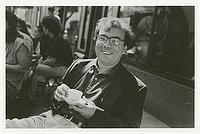
Paolo Mancosu Willis S. and Marion Slusser Professor of Philosophy (Ph.D., Stanford University). His interests lie in the philosophy of mathematics and its history, in philosophy of logic, and in mathematical logic. His work is currently focused upon the philosophy of mathematical practice and mathematical infinity. Recent publications: with S. Galvan and R. Zach, “An Introduction to Proof Theory. Normalization, Cut-Elimination, and Consistency Proofs”, (OUP, 2021)(Shoenfield Prize 2022); with M. Mugnai, “Syllogistic Logic and Mathematical Proof” (OUP, 2023); “In the KGB’s Crosshairs. New Soviet documents on the Pasternak and Ivinskaya cases” (WriteUP, 2024); “The Wilderness of the Infinite. Robert Grosseteste, William of Auvergne and Mathematical Infinity in the Thirteenth century” (OUP, in press).

Michael Martin (Fall Only) Mills Adjunct Professor of Philosophy (D.Phil., University of Oxford). His main interests lie in the philosophy of mind and psychology. He is forever finishing a book on naïve realism in the theory of perception, titled Uncovering Appearances. Currently he is working on the puzzle of conflicting appearances; the contrast between sense perception, memory and imagination; the problem of other minds; and the objectivity of sense experience.

Véronique Munoz-Dardé (Fall Only) Mills Adjunct Professor of Philosophy (Ph.D., European University Institute). Her main interests lie in moral and political philosophy. In recent years she has written articles on the importance of numbers in practical reasoning, on the political ideal of equality, on responsibility, and on distributive justice. During this period she has taught seminars on contractualism, equality, Hume’s Treatise, and values and practical reasoning. She is the author of La justice sociale (2001), and is currently finishing a book on the way that the political is personal, provisionally called Bound Together.

Alva Noë (Chair) Professor of Philosophy (B.A., Columbia; B.Phil., Oxford; Ph.D., Harvard). Noë is a philosopher whose focus is perception and consciousness, as well art and the aesthetic. His most recent book The Entanglement: How Art and Philosophy Make Us What We Are was published by Princeton in 2023. He is currently working on love, AI, and pictoriality. Other writings include: Action in Perception (MIT, 2004); Out of Our Heads: Why You Are Not Your Brain and Other Lessons from the Biology of Consciousness (FSG, 2009); Varieties of Presence (Harvard, 2012); Strange Tools: Art and Human Nature FSG, 2015), Infinite Baseball: Notes from a Philosopher at the Ballpark (Oxford, 2019), and Learning to Look: Dispatches from the Art World (Oxford 2021).

Andreja Novakovic (Graduate Advisor) Associate Professor of Philosophy (Ph.D., Columbia University) and affiliated with the Program in Critical Theory. Her research is in 19th and 20th century European philosophy, with a focus on the work of G.W.F. Hegel. She is the author of Hegel on Second Nature in Ethical Life (Cambridge University Press, 2017) and is currently working on a project about Hegel’s concept of experience. She has additional interests in Nietzsche, critical theory, and feminist philosophy.
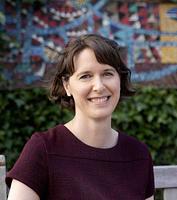
Kristin Primus Associate Professor of Philosophy (Ph.D. Princeton). She works primarily in early modern metaphysics and epistemology, and is currently working on a series of articles on Spinoza. See her home page for more information.

Ezra Rubenstein Assistant Professor of Philosophy (Ph.D. Rutgers University). His main research interests are in the philosophy of science, the philosophy of physics, and metaphysics. He is currently working on projects concerning probability, explanation, causation, identity, fundamentality, physicalism, and logical atomism.

Kwong-loi Shun Professor, Recalled (B. Phil., University of Oxford; Ph.D., Stanford University). Kwong-loi Shun specializes in Chinese philosophy and moral psychology, and his current research is a five-volume work on Confucian thought. The work starts with philological studies of early and later Confucian thought, then discusses methodological issues in transitioning from philological to philosophical studies, and then concludes with a philosophical study of Confucian moral psychology. He was President of the American Philosophical Association (Pacific Division) in 2017-18.

Hans Sluga William and Trudy Ausfahl Professor Emeritus of Philosophy (B. Phil.,University of Oxford). He has broad interests in philosophy of both a historical and systematic kind. His early work was focused on the historical foundations of analytic philosophy (Frege, Moore, Russell, Wittgenstein, and the Vienna Circle). He has also worked extensively on he thought of Ludwig Wittgenstein and Michel Foucault. His systematic interests have increasingly come to concern issues in political philosophy with an emphasis on political realism. He is the author of Gottlob Frege, Heidegger’s Crisis. German Philosophy and Politics in Nazi-Germany, Wittgenstein, and Politics and the Search for the Common Good. For more information go to his website: www.truthandpower.com

Daniel Viehoff Associate Professor of Philosophy (Ph.D. Columbia, J.D. Yale). His research focuses on political and legal philosophy, ethics, and social philosophy. He is especially interested in questions of political authority and legitimacy, democracy and equality, and private law theory.

R. Jay Wallace William and Trudy Ausfahl Chair in Philosophy (B. Phil., University of Oxford; Ph.D., Princeton University). His interests lie mainly in moral philosophy and the history of ethics. Recently he has written on promising, constructivism, resentment, hypocrisy, love, regret and affirmation, and obligation. His publications include Responsibility and the Moral Sentiments (Harvard), The View from Here (Oxford), and The Moral Nexus (Princeton). During the past few years he has taught undergraduate courses on ethics, moral psychology, and free will and graduate seminars on population ethics, reactive attitudes, the evolution of moral capacities, the moral standing of animals, and rational agency.
Daniel Warren Professor Emeritus of Philosophy (M.D., University of Pennsylvania; Ph.D., Harvard University). His work focuses on Kant and on the history and philosophy of science in the 17th and 18th centuries. Recent papers have concerned Kant and the apriority of space, Kant’s conception of things in themselves, and Kant’s dynamics. He teaches courses on introductory logic, bioethics, personal identity, and Kant; recent seminars have been about Leibniz, transcendental arguments, and self-knowledge.

Seth Yalcin Professor of Philosophy (Ph.D., MIT). He works mostly in the philosophy of language, but his research interests extend to issues in the philosophy of mind, metaphysics, formal epistemology, and linguistics.

Xueyin (Snow) Zhang Assistant Professor of Philosophy (Ph.D., Princeton). Her primary research interests lie in formal epistemology, philosophy of probability and decision theory. She is also interested in Chinese philosophy. Her current research concerns rational belief revision, judgment aggregation and logic of conditionals.
Visiting Faculty

Christian Coseru Numata Visiting Professor in Buddhist Philosophy Christian Coseru is the Spring 2025 Numata Visiting Professor in Buddhist Philosophy and Professor of Philosophy in the Department of Philosophy at the College of Charleston. Prof. Coseru specializes in philosophy of mind and cross-cultural philosophy, especially Indian and Buddhist philosophy in dialogue with Western (classical and contemporary) philosophy and cognitive science. He is the author of Perceiving Reality: Consciousness, Intentionality, and Cognition in Buddhist Philosophy (OUP 2012), and editor of Reasons and Empty Persons: Mind, Metaphysics, and Morality (Springer 2023). Prof. Coseru holds licence and maîtrise in philosophy degrees from the University of Bucharest and a Ph.D. from the Australian National University.
Affiliated Faculty
Asad Q. Ahmed Professor of Arabic and Islamic Studies Professor of Arabic and Islamic Studies and Director, Center for Middle Eastern Studies (Ph.D. Princeton University, 2007). He specializes in postclassical (ca. 1200-1900 CE) rationalist disciplines in Islam, including the history of logic, physics, astronomy, and legal theories. He is the author of The Religious Elite of the Early Islamic Hijaz (Oxford, 2011), Avicenna’s Deliverance: Logic (2011), and Palimpsests of Themselves: Logic and Commentary in Muslim India (UC Press, 2021). Some of his publications can be found here: http://berkeley.academia.edu/AsadQAhmed
Meir Dan-Cohen Professor at the law school where he holds the Milo Reese Robbins Chair in Legal Ethics (LL.M., JSD, Yale University). His main interests are in legal, moral, and political philosophy, with a special emphasis on the relevance to these fields of our conceptions of the various actors, individual and collective, that occupy them. He is the author of Rights, Persons, and Organizations: A Legal Theory for Bureaucratic Society, (UC Press, 1986; 2nd Edition, Quid Pro Books, 2016); Harmful Thoughts: Essays on Law, Self, and Morality (Princeton UP, 2002); and Normative Subjects: Self and Collectivity in Morality and Law (Oxford UP, 2016).
Amy Rose Deal Associate Professor of Linguistics (Ph.D., University of Massachusetts Amherst, Linguistics). She is a theoretical linguist with research interests in formal semantics, generative syntax, and their interaction, with special attention to modeling crosslinguistic variation and language universals. Recent work addresses the semantics and syntax of modals, embedded indexicals and indexical shift, the de re/de dicto distinction, and the mass-count distinction.
Jan Engelmann Assistant Professor of Psychology (Ph.D., Max Planck Institute for Evolutionary Anthropology). Jan is the PI of the Social Origins Lab at UC Berkeley. He studies the evolution of cooperation and morality. Many of his studies take a comparative approach: chimpanzees and human children are exposed to as-similar-as-possible experimental circumstances. The goal of this work is to determine what makes human cognition and behavior unique.
G. R. F. (John) Ferrari Professor of Ancient Greek and Roman Studies (Ph.D. Cambridge University, Classics). Professor Ferrari teaches in the Ancient Greek and Roman Studies Department, where he specializes in ancient philosophy. His philosophic interests are in the areas of aesthetics, hermeneutics, and political thought. He has published primarily on Plato, with books on the Phaedrus and the Republic, and has collaborated on a new translation of the Republic.
.jpg)
Joshua Gang Associate Professor of English (Ph.D., Rutgers). His research focuses on the ways that problems from moral philosophy and philosophy of mind press on modern literature and critical practice. His interests also include British and Irish fiction and drama since 1900, the history of criticism, and queer theory. Recent publications include his book Behaviorism, Consciousness, and the Literary Mind (Johns Hopkins, 2021) and the article “Derek Jarman and Everything That is the Case” (Critical Inquiry, Summer 2022). He is currently working on a book about comparisons between moral and aesthetic value, tentatively titled Beautiful Errors: Moral Philosophy, Modern Fiction, and the Appeal to Aesthetics.
Alison Gopnik Professor of Psychology (D. Phil Oxford University). She is a professor in the psychology department and works on problems of causal knowledge and learning, intuitive theory formation, and “theory of mind.” Her work explores the relation between empirical work in cognitive development and classical philosophical problems in epistemology and philosophy of mind. She is coauthor of Words, Thoughts and Theories (MIT Press, 1997) and The Scientist in the Crib (Harper Collins, 2000).
Jodi Halpern Associate Professor, School of Public Health (M.D., Ph.D., Yale University). She is Associate Professor of Bioethics and Medical Humanities in the School of Public Health/Joint Medical Program. She works mainly on emotions and the imagination, with a longstanding focus on empathy. She is the author of From Detached Concern to Empathy: Humanizing Medical Practice (Oxford University Press). Halpern recently received a Greenwall Faculty Scholar career development award to write about emotions and envisioning future well-being, and the impact of this on serious health decisions.
Kinch Hoekstra Associate Professor of Political Science and Law (D.Phil., Oxford University). He specializes in the history of political, moral, and legal philosophy. He has written on ancient, renaissance, and early modern political thought, with a special focus on Thomas Hobbes. From 1996 to 2007, Hoekstra was a member of the Faculty of Philosophy at the University of Oxford, where he also regularly taught graduate students in the Faculty of Classics and the Department of Politics and International Relations. During this same period, he was the Leveson Gower Fellow in Ancient and Modern Philosophy at Balliol College.

Christopher Kutz C. William Maxeiner Distinguished Professor of Law (Ph.D., U.C. Berkeley; J.D., Yale University). He is a faculty member in the Law School’s program in Jurisprudence & Social Policy. He works mainly in moral, legal, and political philosophy, with a current focus on the ethics of war and peace, and the design of just institutions.. He is author of Complicity: Ethics and Law for a Collective Age (Cambridge University Press 2001), and his War and Democracy is forthcoming from Princeton University Press. He is director of the Kadish Center for Morality, Law and Public Affairs a the School of Law.
Line Mikkelsen Associate Professor of Linguistics (Ph.D., U.C. Santa Cruz). Mikkelsen is a faculty member in the Linguistics Department who works on the syntax, semantics, and morphology of natural languages and the relations between these. She maintains an interest in philosophy of language and participates in the Bay Area Philosophy of Language Discussion Group. She is the author of Copular Clauses: Specification, Predication and Equation (2005, John Benjamins).
Eric Rakowski Edward C. Halbach Jr. Professor of Law (B.Phil., D.Phil., Oxford University; J.D., Harvard Law School). He is a law professor who works on questions of moral and political philosophy and bioethics, besides teaching and writing on federal tax issues and trust and estate law. He is the author of Equal Justice (Oxford University Press).
Sarah Song Professor of Law and Associate Professor of Political Science (Ph.D., Political Science, Yale.) She is a faculty member in the Jurisprudence and Social Policy Program at the Law School. She works in moral, political and legal philosophy with a current focus on the ethics and politics of migration and citizenship. She teaches courses in political and legal philosophy, the history of American political thought, and citizenship and immigration law.
John R. Steel Professor of Mathematics (Ph.D., U.C. Berkeley). He is a professor in the mathematics department. Most of his work lies in set theory, and in particular in Gödel’s program for strengthening the set-theoretic foundation of mathematics through the addition of strong axioms of infinity. Broader philosophical issues concerning meaning and evidence for mathematical statements come to the fore here. Steel’s paper “Mathematics Needs New Axioms” (Bulletin of Symbolic Logic, vol. 6 (2000), 422-433) discusses Gödel’s program, with special attention to questions of meaning and evidence.

Anna Stilz Kernan Robson Professor of Political Science (Ph.D., Harvard University). Her research interests include the history of political thought (particularly Rousseau, Kant, Hegel, and Marx); democratic theory; nationalism; political obligation, authority, and state legitimacy; rights to sovereignty and territory; the ethics of migration and borders; climate change and climate justice; and theories of collective agency and collective responsibility.
Distinguished Research Associates
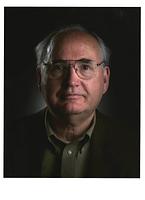
Dana Scott is the emeritus Hillman University Professor of Computer Science, Philosophy, and Mathematical Logic at Carnegie Mellon University; he is now retired and lives in Berkeley, California. His research career involved computer science, mathematics, and philosophy. His work on automata theory earned him the ACM Turing Award in 1976, while his collaborative work with Christopher Strachey in the 1970s laid the foundations of modern approaches to the semantics of programming languages. He has worked also on modal logic, topology, and category theory. (Wikipedia)
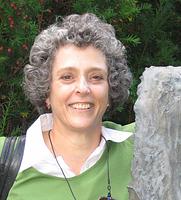
Holly M. Smith Distinguished Professor Emerita of Philosophy at Rutgers University, she has published widely on topics in normative ethics, moral decision making, the theory of moral responsibility, and bio-medical ethics. In Making Morality Work (Oxford University Press, 2018), she explores how moral theories should accommodate the errors, ignorance, and misunderstandings that impede us as moral decision makers. Her current projects propose new strategies for weighing the stringency of deontological duties, and for identifying an agent’s alternatives in the context of normative theories.
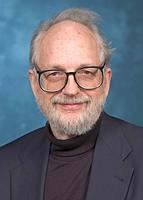
Kendall Walton Professor Emeritus of Philosophy at the University of Michigan. Much of his work consists in exploring connections between theoretical questions about the arts, and issues of philosophy of mind, metaphysics, and philosophy of language. He has written extensively on pictorial representation, fiction and the emotions, the ontological status of fictional entities, the aesthetics of music, metaphor, and aesthetic value. His Mimesis as Make Believe develops a theory of make-believe and uses it to understand the nature and varieties of representation in the arts. He is a Fellow of the American Academy of Arts and Sciences, and past president of the American Society for Aesthetics.
Emeriti
Alan Code Professor Emeritus
Bruce Vermazen Professor Emeritus
Continuing Lecturers in Lieu of GSI
Elle Benjamin Lecturer