
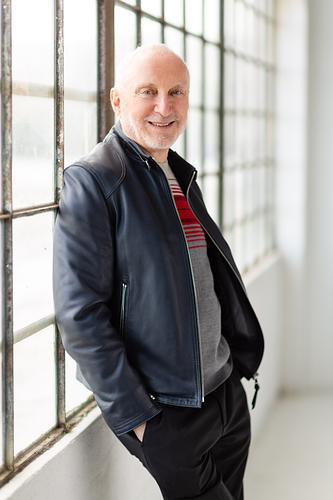
Hans Sluga
William and Trudy Ausfahl Professor Emeritus of Philosophy
Office: 309 Philosophy Hall
Office hours: Tues 11:00am -1:00pm
E-mail: sluga@berkeley.edu
Web: http://www.truthandpower.com
Courses for Fall 2025: Foundations of Analytic Philosophy: Frege
I have broad philosophical interests of both a systematic and a historical kind. These cross the boundaries of so-called “analytic” and “Continental” philosophy. From the latter tradition I have acquired a strongly historical bent. From the analytical tradition I have gained an appreciation of clarity and logical order.
My training in philosophy began with the study of Greek and Latin at the Beethoven Gymnasium in Bonn. At the Universities of Bonn and Munich I subsequently came to develop an interest in symbolic logic and, in particular, in the work of Gottlob Frege but also became familiar with the thought of Martin Heidegger and Max Scheler. It was at Oxford where I discovered Wittgenstein.
In recent years I have become increasingly preoccupied with political philosophy and specifically with what I call “the diagnostic tradition in political philosophy” which I see beginning with Marx and Nietzsche and extending to Carl Schmitt, Hannah Arendt, and Michel Foucault in the twentieth century.
I am currently at work on a book on political realism.
To talk to me directly, please, use the following link: https://berkeley.zoom.us/j/335719792
You can also, of course, write to me by email.